The Actual Story of Dhurandhar and Lyari Mafia
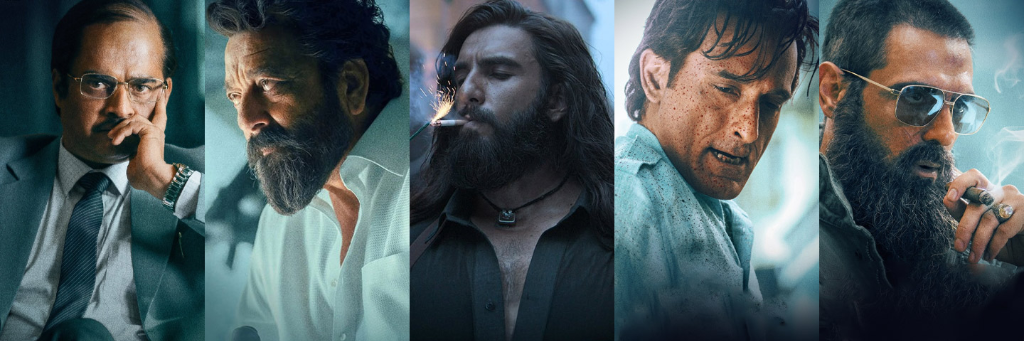
So you have just watched Dhurandhar and are wondering who the characters in the movie were in actual life? So let’s get a crash course on the Karachi mafia which, like Mumbai, could have spun a lot of movies in Pakistan if it had a functioning cinema industry or free thought, to be honest.
- 1. Lyari: Think Dharavi, But With Rocket Launchers
- 2. Rehman Dakait: The "Robin Hood" Who Started It All
- 3. Uzair Baloch: The Corporate Don (Suit, Tie & AK-47)
- 4. Politics: Vote Bank Politics on Steroids
- 5. The Gang War: It Was Literal War
- 6. SP Chaudhry Aslam: The Real-Life "Singham"
- 7. The Economics: How They Made Money
- 8. Karachi vs Mumbai: The Scary Parallels
- 9. The End of an Era
I’ve spent the last few days spiraling down YouTube documentaries and digging through old Pakistani news archives about Karachi, and honestly, it felt like reading a script that even Anurag Kashyap might find too violent. For us Indians, the word "Underworld" brings up images of 90s Mumbai—Dawood, shootings, and encounter cops. But what happened in Karachi was on a completely different level.
This isn’t just about criminals; it’s about how community leaders became warlords, and how politics fueled a civil war in a city that looks and feels so much like our own. Here is what I found.
The Founder] -->|Mentor to| Uzair[Uzair Baloch
The Warlord] Rehman -->|Rival of| Arshad[Arshad Pappu
The Enemy] Uzair -->|Commanded| Baba[Baba Ladla
The Enforcer] Baba -->|Betrayed| Uzair Aslam[SP Chaudhry Aslam
The Cop] -->|Killed| Rehman style Rehman stroke:#111,stroke-width:2px style Uzair stroke:#111,stroke-width:2px style Arshad stroke:#111,stroke-width:2px style Aslam stroke:#111,stroke-width:2px
Chapter 1: Lyari: Think Dharavi, But With Rocket Launchers
If you look at drone shots of Lyari, you’d swear it was Dharavi or one of Mumbai’s older, dense slums. Founded by Baloch settlers and fishermen back in the day, it is called the "Mother of Karachi." But unlike Mumbai’s slums which are bustling economic hubs, Lyari was left to rot. No water, no jobs, zero government presence.
Reading about it, you realize that nature hates a vacuum. When the state disappeared, local "bhais" stepped in. They weren't just gangsters; they were the guys settling disputes, paying for weddings, and protecting the neighborhood. It reminds you of the early days of Mumbai dons—they were community heroes before they became monsters.
The famous "People’s Aman Committee" (PAC) basically started as a welfare group. Imagine if a local NGO was run by guys with AK-47s. That’s Lyari. It was the classic "Robin Hood" trap—they gave bread with one hand and dealt drugs with the other.
Chapter 2: Rehman Dakait: The "Robin Hood" Who Started It All
Every mafia story has that one OG figure. For Lyari, it was Abdul Rehman Baloch, aka Rehman "Dakait". Born in 1980, this guy’s life reads like a movie. He killed his own mother at a young age during a family dispute—a fact that instantly sets the tone for how ruthless he was.
Rehman wasn’t just a thug; he was smart. After taking over from an older gangster, he consolidated power. He fought a bloody turf war with Arshad "Pappu" (yes, that was his rival's name), turning the streets into a battleground. But strictly for the people of Lyari, he was a savior. He distributed money, held open courts, and made sure no outsider messed with his people. It’s a very conflicted legacy, much like some figures in our own history.
His end was typical of the genre: a police encounter in 2009 by SP Chaudhry Aslam. But his death didn't end the violence; it just unleashed something worse.
Chapter 3: Uzair Baloch: The Corporate Don (Suit, Tie & AK-47)
If Rehman was the street fighter, his successor Uzair Baloch was the CEO. This part of the story amazed me. Uzair took over and "corporatized" the gang. He wasn't running around with a gun; he was holding press conferences, wearing crisp suits, and meeting politicians.
Uzair realized that to survive, you need the government. He effectively became the "ground commander" for the PPP (Pakistan People’s Party) in Lyari. He delivered votes—thousands of them. In exchange, he got free reign. In his confession (which is all over the internet), he claimed he handpicked police officers for the area. Can you imagine? The don deciding who the SHO would be. That is next-level state capture.
Chapter 4: Politics: Vote Bank Politics on Steroids
This is where the story gets darker and feels eerily familiar to South Asian politics. Karachi was divided by ethnicity, and political parties used gangs as their private armies.
- PPP (The Ruling Party): They had Lyari and Uzair Baloch.
- MQM (The Immigrant Party): Representing the Urdu-speaking population (Muhajirs), they had their own massive, disciplined militia.
- ANP (The Pashtun Party): Representing the Pashtun migrants, with their own enforcers.
From 2010 to 2013, these groups fought a proxy war for control of the city. We are talking about thousands of targeted killings. If you belonged to the wrong ethnicity and walked into the wrong street, you were done. It was "Vote Bank Politics" turned into a literal bloodsport.
Chapter 5: The Gang War: It Was Literal War
When the truce broke, Lyari became a war zone. I saw clips of Rocket Propelled Grenades (RPGs) being fired in narrow lanes. RPGs! In a city! Gang members were livestreaming gunfights before it was a thing.
The brutality was shocking. The murder of Arshad Pappu by Uzair’s gang is particularly gruesome. They didn't just kill him; they allegedly played football with his head. It’s the kind of horror story that makes you shudder, realizing how cheap human life had become in that chaos.
Chapter 6: SP Chaudhry Aslam: The Real-Life "Singham"
Now, let's talk about the cop. SP Chaudhry Aslam. If Bollywood made a movie about him, critics would say it's too unrealistic. He was a chain-smoking, bearded, swore-by-the-gun cop who didn't care for "procedure". He was the "Encounter Specialist" of Karachi.
He hunted these gangs relentlessly. He survived multiple assassination attempts. In one video, after his house was bombed by the Taliban, he stood in the rubble, dusted off his clothes, and gave an interview saying he wouldn't stop. He was the only thing standing between the gangs and total anarchy.
Sadly, in 2014, his luck ran out. He was killed in a massive suicide bombing. It felt like the end of the "hero cop" era for Karachi. Even his enemies respected his guts.
Chapter 7: The Economics: How They Made Money
It wasn't just about territory; it was about money. Huge money.
Bhatta (Extortion): Every shopkeeper, from a small chaiwala to a factory owner, paid "tax"
to the gangs. Uzair admitted to collecting crores every month.
Diesel Smuggling: This is unique to Karachi. They smuggled cheap fuel from nearby Iran
through the ports and sold it across Pakistan.
Espionage: This is the wildest part. Uzair was later convicted of spying for Iranian
intelligence. It turns out, when you own the port city's underworld, foreign agencies get interested.
Chapter 8: Karachi vs Mumbai: The Scary Parallels
As an Indian reading this, you can't help but compare.
The Dons: Uzair Baloch is basically a later-stage Dawood—politically connected, untouchable, running a parallel government.
The Cops: Chaudhry Aslam is our Vijay Salaskar or Pradeep Sharma. The "dirty harry" cop who does what needs to be done because the system is broken.
But the difference? The weapons. Mumbai had pistols and homemade bombs. Karachi had military-grade weapons mostly fallout from the Afghan wars. The scale of violence in Karachi was just... heavier.
Chapter 9: The End of an Era
Eventually, the state had enough. In 2013, a massive "Karachi Operation" was launched by the paramilitary Rangers. They went block by block, cleansing the city. It took years, but they broke the gangs' backs.
Uzair Baloch was arrested in Dubai (classic don move) and brought back. He is currently in jail, facing a mountain of cases. Lyari is peaceful now, but the scars are everywhere. The bullet holes on the walls are still there, reminding everyone of the years when the city went mad.
Conclusion - A Cautionary Tale
The story of the Karachi mafia is a cautionary tale of what happens when politics and crime mix too deeply. For me, it was a fascinating, terrifying look into our neighbor's backyard. It shows how quickly a vibrant city can be eaten alive from the inside when the "protectors" become the predators.
So, when you watch Dhurandhar, remember: the reality was far crazier, far bloodier, and far more complex than any movie script could ever capture.
Further Reading & Sources (May need VPN for few)
- Real Story Behind Dhurandhar Movie - Times of India
- Lyari - Wikipedia
- Kingdom of Fear - Tribune.pk
- Lyari: A Virtual War Zone - Dawn
- Real life Dhurandhar: Karachi's toughest cop - India Today
- How Rehman Dakait lost politicians' love - Dawn
- Uzair Baloch spills the beans - Tribune
- Uzair Jan Baloch: A Profile - Dawn
- Karachi's ethnic faultlines exposed - The Guardian
- Conflict Dynamics in Karachi - USIP (PDF)
- Karachi Vice: Inside the city torn apart - The Guardian